
Every epoch generates its own custodians of truth.
In medieval Europe, legitimacy was vested in monarchs and bishops. The Enlightenment relocated epistemic authority towards philosophers, scientists and rational inquiry. The twentieth century witnessed the ascendancy of politicians, bureaucrats and technocratic elites. In contemporary Africa, however, one of the most consequential repositories of public legitimacy has emerged in a rather different form: the charismatic pentecostal pastor.
The extraordinary expansion of charismatic Christianity across Uganda constitutes one of the most significant social transformations of the past half century. Vast congregations assemble weekly in pursuit of healing, prophecy, deliverance, prosperity and existential reassurance. Pentecostal Churches have evolved into far more than religious organisations. They have become influential sites of social organisation, economic mobilisation, political mediation and cultural production. In many communities, they exercise a degree of influence rivalled by few secular institutions.
Yet history demonstrates with remarkable consistency that wherever authority accumulates, scrutiny inevitably follows.
It is against this broader backdrop that the recent and widely publicised exchanges between Frank Gashumba and Pastor Robert Kayanja must be understood. To reduce the controversy to a personal disagreement would be to overlook its deeper sociological significance. What is unfolding before the Ugandan public is not merely a dispute between two Ugandans but a contest over the nature, limits and legitimacy of religious authority in a democratic age.
At its core, the controversy is not principally about Pastor Kayanja. Nor is it fundamentally about one critic.
Rather, it concerns whether institutions that claim exceptional moral and spiritual authority can remain insulated from the forms of public examination increasingly directed towards every other centre of influence within society.
That question resides at the very heart of modern democratic culture.
Historically, religious authority occupied a privileged realm beyond ordinary challenge. To question the preacher was frequently construed as questioning God. Criticism was framed not as intellectual disagreement but as spiritual insubordination. Such assumptions proved enduring precisely because their legitimacy was derived not from mechanisms of accountability but from appeals to transcendence and the sacred.
What makes the present moment distinctive is that this historical settlement has been profoundly destabilised.
Social media has transformed the architecture of public discourse with unprecedented force. For perhaps the first time in Uganda’s history, pastors, politicians, journalists, lawyers, academics and public intellectuals inhabit the same digital sphere, exposed to identical mechanisms of scrutiny and compelled to engage an increasingly participatory public.
In this context, Gashumba’s intervention assumes a significance that extends far beyond the specific individuals involved.
Whether one agrees with his conclusions is, in many respects, secondary. What matters is that his challenge reflects an expanding public demand for evidential accountability. The underlying question is deceptively simple yet politically profound: if individuals publicly claim extraordinary spiritual gifts, miraculous powers or exceptional divine authority, should such claims remain exempt from interrogation?
The question speaks directly to an emerging tension between faith and verification.
For many believers, miracles belong to the sphere of transcendence. Their meaning is apprehended through faith rather than established through empirical demonstration. For sceptics, however, extraordinary claims invite evidential scrutiny. The resulting disagreement is not easily resolved because it concerns far more than competing interpretations of evidence. It reflects fundamentally different understandings of reality, knowledge and truth itself.
Yet the debate extends beyond questions of miracles.
It reaches equally sensitive questions concerning wealth, power and institutional accountability.
Across the developing world, prosperity theology has emerged as one of the most influential religious currents of the contemporary era. Its central premise is that faith, sacrificial giving and obedience may generate material blessing. To its advocates, this theology offers hope, agency and psychological resilience within contexts often characterised by economic insecurity and structural deprivation. To its critics, however, it risks commodifying belief, transforming spiritual aspiration into economic exchange and faith into an instrument of financial extraction.
The ethical dilemma is therefore unavoidable.
How should societies evaluate circumstances in which substantial wealth is accumulated within religious systems financed predominantly by ordinary citizens, many of whom continue to experience profound economic hardship?
This is not an argument for clerical asceticism.
Nor is it an expression of hostility towards religious success.
Rather, it reflects a broader democratic principle: influence, wealth and authority invariably generate corresponding obligations of transparency, justification and accountability.
Indeed, one might plausibly argue that institutions claiming moral authority should welcome scrutiny rather than resist it. Transparency is not the adversary of faith. More often, it is the precondition of credibility.
This is precisely why public responses to criticism matter.
Throughout history, enduring spiritual leaders have distinguished themselves not by their capacity to attract admiration but by their ability to confront dissent. The willingness to engage criticism with composure, intellectual confidence and moral restraint has long been understood as indicative of ethical seriousness.
Conversely, when criticism is met with denunciation, personal antagonism or threats of divine retribution, public attention frequently shifts away from the critic and towards the nature of the response itself.
Under such circumstances, a more profound question begins to emerge:
Are citizens witnessing spiritual leadership, or institutional power engaged in self-preservation?
The distinction is of considerable importance.
Moral authority derives from integrity, wisdom and public trust. Institutional authority derives from position, influence and organisational power. The two may coincide, but they are not synonymous. History offers innumerable examples of individuals possessing immense influence while displaying little moral insight, just as it offers examples of individuals exercising profound moral authority despite holding no formal power whatsoever.
The present debate therefore extends far beyond the personalities presently dominating public attention.
It concerns the future architecture of Ugandan public life itself.
A new generation is emerging; educated, digitally connected and increasingly unwilling to accept inherited assumptions without examination. This generation does not necessarily reject religion. Indeed, many remain deeply committed to faith. What distinguishes them is their conviction that belief and critical inquiry are not mutually exclusive.
They seek explanation where previous generations accepted declaration.
They request evidence where earlier generations deferred to status.
They regard accountability not as sacrilege but as an essential component of democratic citizenship.
For religious institutions accustomed to operating within cultures of deference, this transformation may appear unsettling. Yet paradoxically, it may strengthen rather than diminish public trust.
For the enduring question is not whether Pentecostal churches should wield influence. They unquestionably will.
Nor is the issue whether critics should possess the freedom to challenge religious leaders. Within any genuinely democratic society, such challenges are both inevitable and necessary.
The deeper question is whether institutions claiming sacred authority can successfully adapt to an age in which no authority remains beyond scrutiny.
That, ultimately, explains the significance of the current controversy.
It is not merely a disagreement between a pastor and his critic.
It is a struggle between competing conceptions of authority itself.
On one side stands the traditional assumption that spiritual leaders occupy a uniquely protected sphere insulated from public challenge. On the other stands an emerging democratic conviction that all authority, however sacred its claims, must ultimately submit itself to examination.
The outcome of that contest may shape not only the future trajectory of Ugandan Christianity, but also the evolving character of Ugandan democracy. For the substantive issue at stake is not religion versus scepticism. It is whether legitimacy in the twenty first century derives from exemption from scrutiny or from the capacity to withstand it.
The answer to that question will reverberate far beyond the present controversy. It may well determine how authority itself is understood, exercised and contested in Uganda for generations to come.
About the author
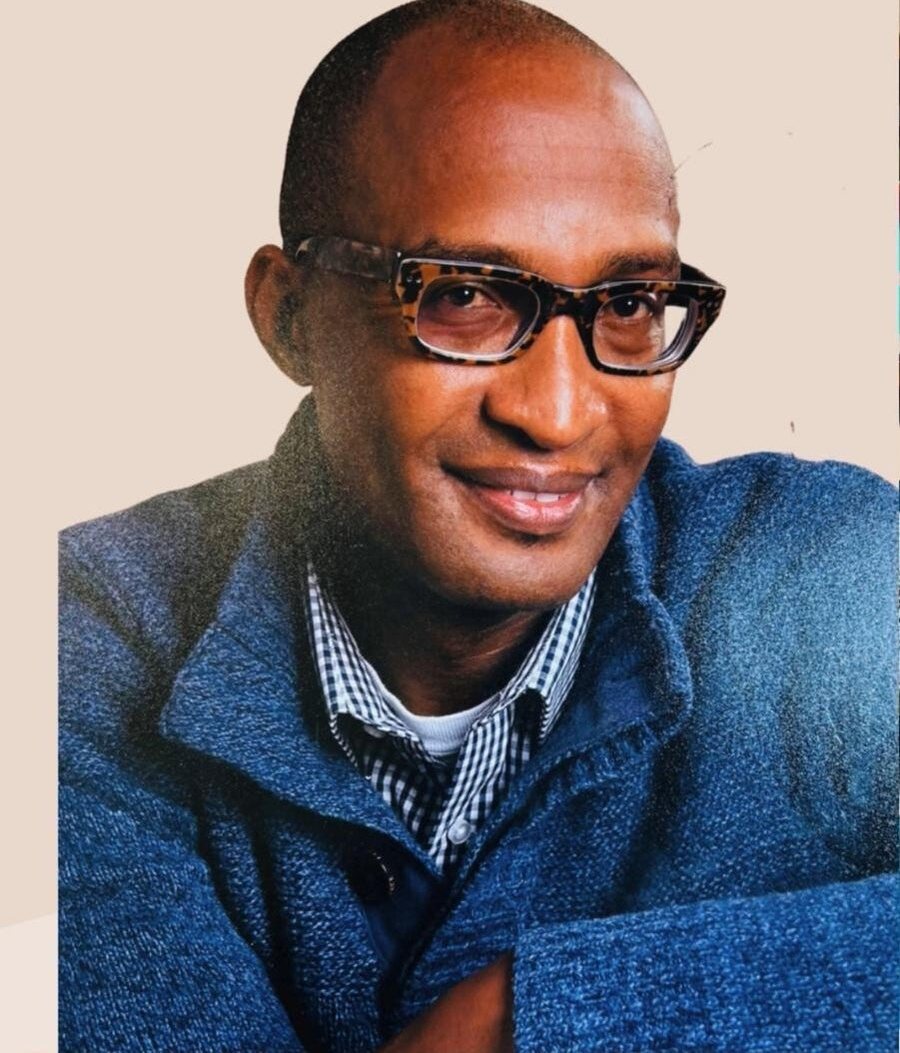
Dr Charles Mugisha is a social work academic and researcher based in the United Kingdom. A former Catholic seminarian, he studied Philosophy and Theology before undertaking further academic training in History, Refugee Law, African Studies and Social Work. His interdisciplinary research explores questions of authority, morality, religion, social governance, anti-racist social work and public accountability. Drawing upon insights from the humanities and the social sciences, his work examines the changing character of institutions, power and public life in contemporary society.
Conversation
Comments
Share a reflection, question or critique. Comments are moderated before they appear.
Loading comments…