
Abstract
The terms Bakiga and Banyakigezi are frequently employed interchangeably in both popular discourse and academic writing concerning south western Uganda. Such usage has contributed to the widespread assumption that Kigezi constitutes a historically homogeneous Bakiga homeland whose cultural and political development can be explained primarily through the history of a single ethnic community. This article challenges that interpretation. It argues that Bakiga identity emerged through complex historical processes of migration, settlement, linguistic consolidation, environmental adaptation and cultural incorporation, while the category Manyakigezi evolved as a broader territorial consciousness encompassing diverse communities whose histories became interconnected within the Kigezi Highlands. Drawing upon historical, anthropological and oral historical literature, the article demonstrates that the making of Kigezi involved not only Bakiga cultivator communities, but also Abashambo aristocratic lineages, Abatutsi ba Bakora of Ndorwa, Batwa forest populations, Bafumbira communities and wider interlacustrine networks linking present day Uganda and Rwanda. The article further contends that colonial ethnography obscured this complexity through classificatory practices that conflated territorial belonging with ethnicity. Recovering these multiple historical traditions permits a more nuanced understanding of identity, belonging and historical consciousness within the Great Lakes region.
Keywords: Bakiga, Banyakigezi, Bakora, Abashambo, Ndorwa, Kigezi, ethnicity, historical memory, Great Lakes Africa
Introduction
The question “Who are the Bakiga?” appears deceptively uncomplicated. The term is commonly used to describe the Bantu speaking inhabitants of Uganda’s Kigezi Highlands. Yet such a definition conceals a series of conceptual and historical difficulties. It assumes that the boundaries of ethnicity correspond with the boundaries of territory. It presumes that Kigezi has always been the homeland of a singular people. Most importantly, it reduces a historically complex region to the story of a single ethnic formation.
Recent scholarship on Africa has repeatedly cautioned against such assumptions. Ethnic communities are not primordial entities preserved unchanged across centuries. They are historical formations whose meanings evolve through processes of migration, cultural interaction, political transformation and collective memory (Southall, 1970; Ranger, 1983; Mamdani, 1996). The Bakiga are no exception.
This article argues that the history of Kigezi cannot be reduced to the history of the Bakiga alone. Rather, Kigezi should be understood as a historical frontier within which multiple communities negotiated power, identity and belonging over many centuries. The distinction between Bakiga and Banyakigezi therefore offers an important analytical framework for understanding the region’s past. Whereas Bakiga denotes an ethnocultural community, Banyakigezi refers to the wider historical society that emerged through interaction among numerous populations inhabiting the Kigezi Highlands.
Understanding this distinction requires moving beyond colonial tribal categories and engaging with the deeper social history of the region.
Kigezi and the Historical Production of Ethnic Identity
The emergence of Bakiga identity was neither inevitable nor instantaneous. Rather, it represented the culmination of centuries of social interaction among populations inhabiting one of the most geographically distinctive regions in East Africa. Situated within the interlacustrine corridor linking Uganda, Rwanda, Burundi and eastern Congo, Kigezi occupied a strategic position within wider networks of migration and exchange (Chrétien, 2003).
Contrary to older colonial assumptions, the Bakiga did not originate from a single migratory movement or common ancestor. Oral traditions preserved among different clans reveal diverse historical trajectories. Some traditions emphasise origins in Rwanda, others point towards Buhweju, Ankole, Ndorwa or neighbouring regions (Turyahikayo-Rugyema, 1974; Karugire, 1980). Such diversity should not be interpreted as contradiction. Rather, it suggests that Bakiga identity emerged through the gradual incorporation of multiple communities into a broader social formation.
The concept of ethnogenesis is particularly useful here. The Bakiga became Bakiga not because they shared a singular place of origin but because generations of interaction produced common forms of language, culture and historical consciousness. Ethnicity therefore emerged as an outcome of history rather than its starting point.
Landscape, Labour and the Social Construction of Bakiga Identity
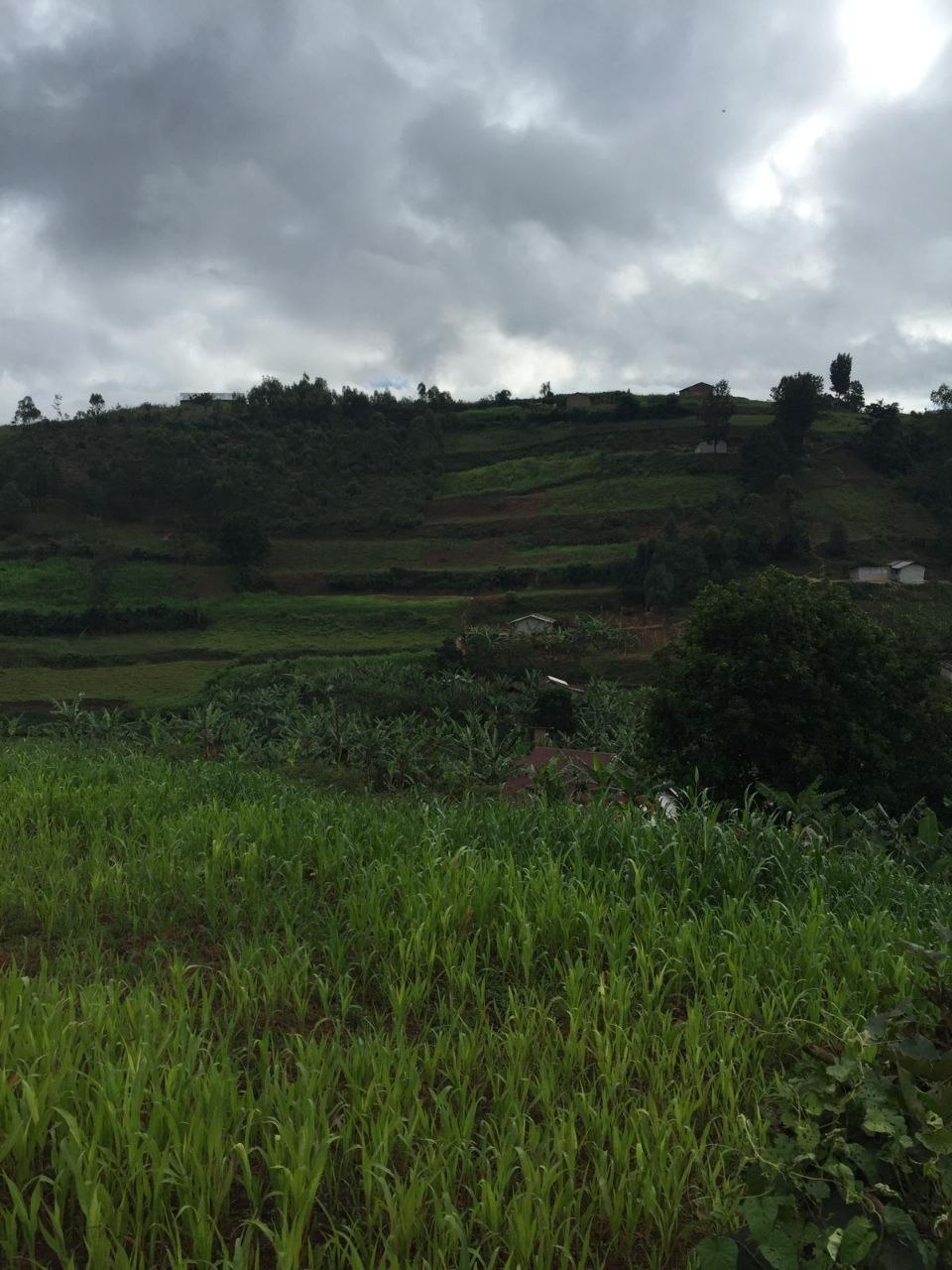
The physical environment of Kigezi played a crucial role in this process. Its steep mountains, deeply incised valleys and densely populated hillsides created conditions that demanded intensive agricultural adaptation (Carswell, 2007).
The celebrated reputation of the Bakiga as industrious cultivators cannot be understood apart from these environmental realities. Terrace construction, soil conservation and labour intensive farming became necessities rather than cultural preferences. Over time, these practices acquired moral significance and became embedded within wider social values concerning hard work, perseverance and self reliance.
Yet the landscape did more than shape economic behaviour. It also served as a repository of memory. Hills became associated with particular clans. Valleys were woven into migration narratives. Ancestral homesteads functioned as geographical anchors of collective remembrance. Consequently, place and identity became intimately intertwined.
The mountains of Kigezi were not simply inhabited by the Bakiga. They actively participated in the historical production of Bakiga identity.
Aristocratic Traditions and the Political Culture of Ndorwa
The tendency to present Kigezi as an exclusively agrarian and egalitarian society overlooks the historical significance of aristocratic traditions within the region. Colonial descriptions often portrayed the Bakiga as politically fragmented and lacking the hierarchical institutions associated with neighbouring kingdoms (Oberg, 1940). Such representations were, however, deeply influenced by colonial assumptions regarding legitimate forms of political authority.
A closer examination of the historical record reveals the existence of aristocratic lineages whose influence extended across significant portions of Ndorwa and the wider Kigezi region. Among these, the Abashambo occupy a particularly important position.
Traditions associated with the Abashambo preserve memories of cattle culture, hereditary prestige and aristocratic authority. Their prominence illustrates that political organisation within Kigezi was neither uniformly egalitarian nor entirely decentralised. Instead, authority operated through a variety of institutions including lineage seniority, social prestige, ritual authority and pastoral wealth.
The history of the Abashambo therefore complicates simplistic narratives that oppose centralised kingdoms to stateless societies. It reveals the existence of intermediate political forms that structured social relations throughout the region.
Abatutsi Babakora and the Historical Geography of Elite Identity
No serious reconstruction of Kigezi’s past can ignore the historical significance of the Abatutsi ba Bakora of Ndorwa. Although their history remains understudied within formal academic literature, Bakora traditions occupy an important place within local historical consciousness and genealogical memory.
The Bakora are remembered within oral traditions as aristocratic lineages associated with pastoral culture, genealogical prestige and inherited social distinction. Situated within the broader historical landscape of Ndorwa, they participated in political and cultural systems linking the region to wider developments in the Great Lakes world (Chrétien, 2003; Newbury, 1988).
The significance of the Bakora extends beyond questions of ancestry. Their traditions reveal the importance of lineage as a basis of political authority and historical legitimacy. Across much of the interlacustrine region, cattle ownership functioned not merely as a form of wealth but as a foundation of social influence. Through systems of patronage and alliance, aristocratic lineages established enduring networks of authority whose reach extended far beyond individual households.
What distinguishes the Bakora within Kigezi historiography is the centrality of genealogy. Historical memory among Bakora communities has often been preserved through elaborate systems of hereditary remembrance that transmit knowledge concerning migration, settlement, succession and political authority across generations. These genealogical traditions constitute indigenous archives whose importance is increasingly recognised within African historiography (Vansina, 1985).
Their significance is especially evident within communities associated with Nyamirwa and neighbouring localities where clan histories remain essential repositories of collective memory. Such traditions challenge the assumption that written colonial records represent the sole authoritative source for reconstructing the region’s past. Instead, they reveal alternative forms of historical knowledge rooted in oral transmission and ancestral remembrance.
Far from existing on the margins of Kigezi’s history, the Bakora illuminate dimensions of aristocratic culture, political authority and historical consciousness that would otherwise remain obscured.
Colonial Ethnography and the Invention of Tribal Simplicity
The marginalisation of both the Abashambo and the Bakora within mainstream historiography reflects the enduring influence of colonial knowledge production. Colonial administrators sought clearly defined tribes that could be categorised, counted and governed (Mamdani, 1996).
The outcome was the simplification of complex social realities. Flexible identities became fixed ethnic classifications. Lineages became tribes. Historical ambiguities became administrative certainties.
In this process, Kigezi was increasingly represented as a Bakiga region populated by a singular tribal community. The richness of Ndorwa’s aristocratic traditions, the historical experiences of the Batwa and the diversity of local genealogical cultures were often obscured.
Consequently, much of what is commonly accepted concerning Bakiga identity today reflects colonial categories rather than precolonial realities.
The Batwa Question and the Silences of Regional History
The history of Kigezi also demands engagement with the Batwa, among the region’s oldest known populations. Historically associated with the forests of Bwindi and Mgahinga, the Batwa occupied ecological and cultural spaces distinct from those of agricultural and pastoral communities (Lewis, 2000).
The expansion of cultivation, the growth of political authority and later colonial conservation policies resulted in progressive displacement and marginalisation. Yet Batwa experiences remain largely absent from dominant regional histories.
Their marginalisation reveals broader problems within the construction of historical memory. Histories of Kigezi have often privileged narratives of settlement and cultivation while neglecting experiences of dispossession and exclusion. Recovering Batwa history is therefore essential for a genuinely inclusive understanding of the region.
Bakiga and Banyakigezi: Ethnicity and Territorial Belonging
The distinction between Bakiga and Banyakigezi may now be understood more clearly.
Bakiga denotes a culturally and linguistically constituted ethnic community whose members share historical traditions associated with the Kigezi Highlands. The category is grounded in language, memory, kinship and social practice.
Banyakigezi, however, encompasses a wider historical community. It refers to all those whose histories are rooted in Kigezi. It includes Bakiga populations but also embraces Abashambo lineages, Batwa communities, Bafumbira groups, Bahororo traditions, Bakora genealogies and numerous other communities whose experiences collectively contributed to the making of the region.
The distinction is therefore more than semantic. It serves as a corrective to ethnocentric interpretations of Kigezi’s past and restores recognition to the plurality of historical actors who shaped the region.
Conclusion
The history of the Bakiga cannot be disentangled from the wider history of Kigezi. Equally, the history of Kigezi cannot be reduced to the history of the Bakiga alone. The region emerged through centuries of interaction among cultivators, pastoralists, aristocratic lineages, forest communities and migrant populations whose experiences became intertwined within a shared geographical landscape.
The Abashambo reveal the complexity of regional political authority. The Abatutsi ba Bakora illuminate the significance of aristocratic culture, genealogy and indigenous historical memory. The Batwa remind scholars of the silences and exclusions embedded within dominant historical narratives. Together, these traditions demonstrate that Kigezi was never a historically homogeneous ethnic homeland.
A more persuasive interpretation therefore distinguishes between Bakiga as an ethnocultural formation and Banyakigezi as a broader territorial and historical community. Such a distinction not only enriches understanding of south western Uganda but also contributes to wider debates concerning ethnicity, belonging and historical consciousness in Africa.
References
-
Carswell, G. (2007) Cultivating Success in Uganda: Kigezi Farmers and Colonial Policies. Oxford: James Currey.
-
Chrétien, J.P. (2003) The Great Lakes of Africa: Two Thousand Years of History. New York: Zone Books.
-
Karugire, S.R. (1980) A Political History of Uganda. Nairobi: Heinemann.
-
Lewis, J. (2000) The Batwa Pygmies of the Great Lakes Region. London: Minority Rights Group International.
-
Mamdani, M. (1996) Citizen and Subject: Contemporary Africa and the Legacy of Late Colonialism. Princeton: Princeton University Press.
-
Newbury, D. (1988) The Cohesion of Oppression: Clientship and Ethnicity in Rwanda, 1860–1960. New York: Columbia University Press.
-
Oberg, K. (1940) The Social Organization of the Kiga. London: International African Institute.
-
Ranger, T. (1983) ‘The invention of tradition in colonial Africa’, in Hobsbawm, E. and Ranger, T. (eds.) The Invention of Tradition. Cambridge: Cambridge University Press, pp. 211–262.
-
Reid, R. (2017) A History of Modern Uganda. Cambridge: Cambridge University Press.
-
Southall, A.W. (1970) The Illusion of Tribe. Nairobi: East African Publishing House.
-
Turyahikayo-Rugyema, B. (1974) ‘The cultural history of the Bakiga of south western Uganda’, Uganda Journal, 38(2), pp. 45–68.
-
Vail, L. (ed.) (1989) The Creation of Tribalism in Southern Africa. Berkeley: University of California Press.
-
Vansina, J. (1985) Oral Tradition as History. Madison: University of Wisconsin Press.
Conversation
Comments
Share a reflection, question or critique. Comments are moderated before they appear.
Loading comments…